
I like this game. It’s harder than it looks.
You’ll get a series of hints. Slam the buzzer when you know the answer.
An owner calls and says his dog is itchy.
BUZZ! FLEA ALLERGIES!
Ah yes, very good guess, but you haven’t even seen the dog yet.
The dog is not on flea control.
BUZZ! IT’S TOTALLY FLEA ALLERGIES!
Look, I get that is a reasonable assumption, but we need a little more information to make an accurate diagnosis.
The dog is a bulldog.
BUZZ! It’s GOTTA be allergies!
Maybe. It sure would fit.
The dog is five years old.
BUZZ! Maybe atopy?
Some other vet treated him with some stuff a month or maybe two ago, and it went away for a bit but then it came back.
BUZZ! Uh…wait…prednisone? Antibiotics? What was he treated with? Did they do any tests?
No tests.
He looks like this:
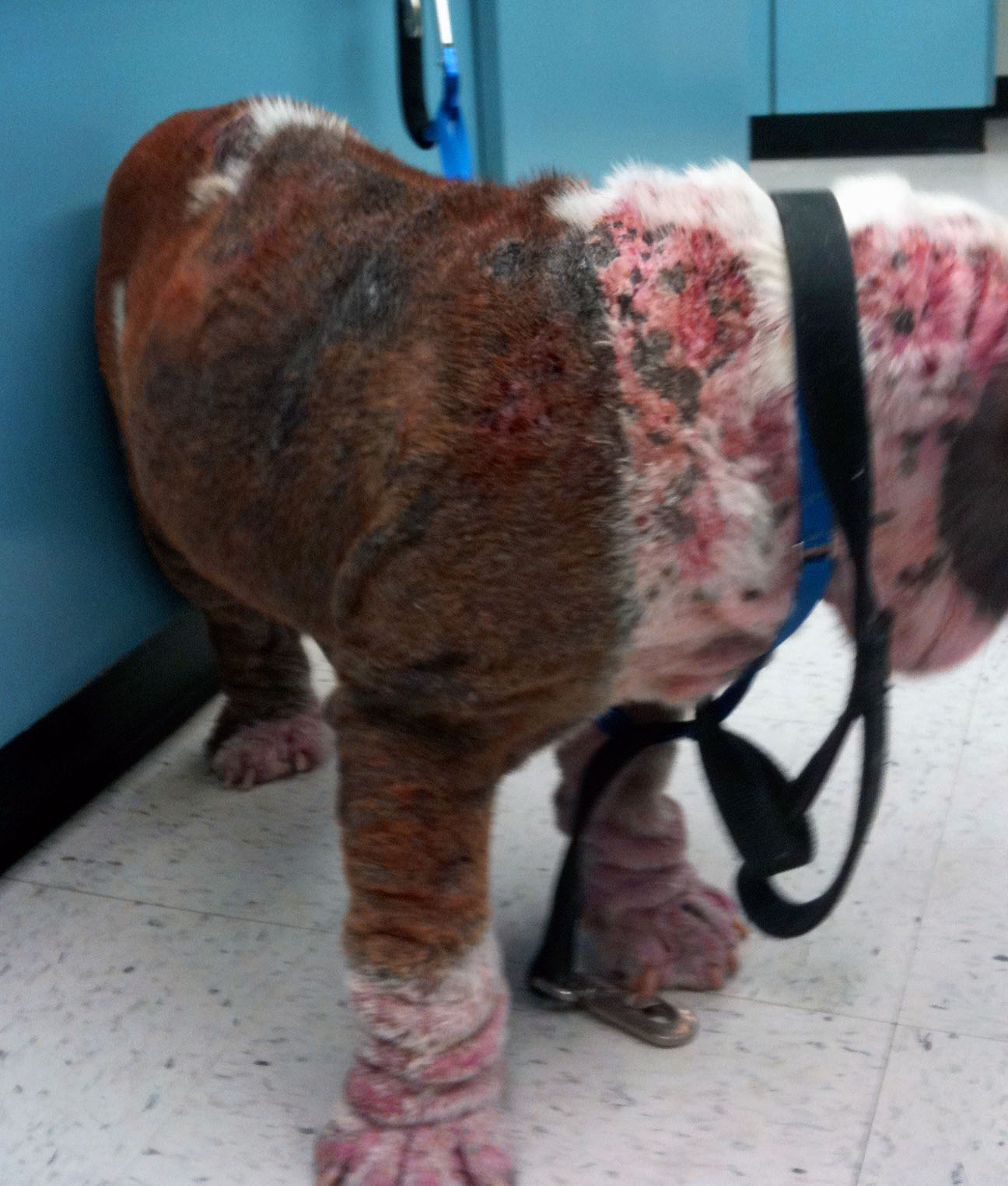
buzz- wait- oh my god, what is that? Yeast? Deep pyoderma? Ringworm? Pemphigus? Dermal lymphoma?
I’ll tell you what it is. I have no friggin clue. It could be any of those things because NASTY SKIN ALL LOOKS NASTY NO MATTER WHAT CAUSED IT.
Sure, there are clues- what we refer to as signalment: breed of dog, age; medical history; the physical examination itself. But if there is one thing I have learned, and been burned by more times than I can count, it is that skin surprises you all the time. Without doing diagnostics, you’re just slamming your hand prematurely on the buzzer and playing the odds that you’ll be right most of the time.
And most of the time it works. But when it doesn’t, it can get ugly. Consider this sweet dog, gentle and kind despite his painful looking dermis, whose owner fortunately allowed me to do some testing.
The skin impression has tons of cocci.
BUZZ! PYODERMA! I TOLD YOU IT WAS AN INFECTION!
Yes, but what about the skin scrape?
WHY WOULD I DO THAT? HE’S TOO OLD TO GET MITES! THAT MAKES NO SENSE! WHAT A WASTE OF CLIENT MONEY, YOU ROTTEN MONEY STEALING VET FULL OF UNNECESSARY TESTS!
Here is the skin scrape:
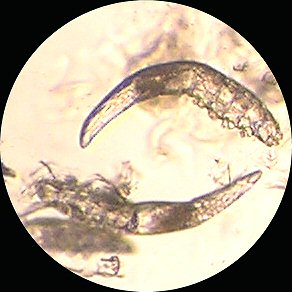
BUZZ! Demodex! ADULT ONSET DEMODICOSIS WITH A SECONDARY DEEP PYODERMA! That’s what I thought all along.
We did finally get to our diagnosis, though it was not the one we all thought it would be. It’s easier, the more you are in practice and the more things you see, to rely on your intuition and experience to make the diagnosis for you, and a lot of people expect that of you. But it’s my job to remind myself every day to be thorough and vigilant. To tell owners, “Look, I think it’s this, but let’s confirm it with x/y/z.”
Had I skipped that one test, the one I had the hardest time convincing the owner to do, multiple things would have happened:
1. There would have been a major delay in getting this poor pup the meds he needed;
2. We would have missed a disease that is a warning flag for an underlying immune suppression.


Poor Baby!! Our Westie is prone to skin anything so i understand the frustration and concern for the boy. Glad you were able to get to the right fix the first time around!
Woo! Demodecosis totally went up to the top of my list after looking at him, for some reason… (I must be psychic!) Did you find any underlying reason for the immune suppression? My derm professor in school always told us: “Scrape, pluck and smear!”
The owner couldn’t afford to workup the systemic issues, but hopefully we will get there.
Oh poor Bulldog. 🙁 Yay for you helping him!
POOR POOCHIE!!! thank goodness you were there on his/her behalf to get the tests done s/he needed! score one for Dr. V!!!
Oh my goodness, the poor baby! Somehow I think I would have called my vet and had tests done BEFORE it got that bad, but at least the owner did call you and let you do the tests. Just…. wow!
Suddenly I am really itchy…
If you hear squealing when you show the results of the skin scrape, that’s me flailing about within the studio audience. Ewwwww!!!!
That poor dog!
I learned this lesson myself recently. 🙁 Apparently, so did my 70-something year old boss, so I didn’t feel quite so bad once I figured it out and he reacted with such surprise.
Well at least she let you do some testing. Drives me nuts when I hear,” my has been vomiting for 5 days, he won’t eat or drink and my Vet wanted to do bloodwork and maybe even an x-ray, I am not spending that kind of money. I don’t understand why he just couldn’t tell me what is wrong”..
I can explain until I am blue in the face, and then they come up with something like,” my old vet would have just given me some pills and he would have been fine”
All I can say is I hope your dog gets better..
Why do they even bother going to a Vet..
OMG. glad i didnt read that while eating! I cant believe the other vet did no tests!
Well, to be fair the owner did not indicate whether or not the other vet offered tests, which they declined. That is often the case.
Awh that poor dog. Ugh that looks so itchy and painful. Ugh I hope he feels better really soon. And I agree with a previous comment, I’m itchy now too!!
Poor puppy! The little thing must be feeling so miserable. 🙁 As silly as it sounds, I kind of still want to snuggle with the bugger. Look how cute and squishy he/she still looks! *Headsmoosh*
Ouch! What a mess… I can’t believe that they let him that bad before seeking more care. Glad you were able to find out what was causing this. Just another reason why diagnostics are well worth the price!
Poor guy! I get rashes when I am stressed. My heart goes out to any being with skin stuff.
Good thing this dog has a great vet!
Now I mean…..
*nice* owner. I just love owners that do nothing for such a long time that the dog gets in such horrible condition and then they have the nerve to gripe about tests. Dr V -How long do you think it took for the dog’s sking to get like that?
Thank you! I wish everybody had this attitude, not only with skin issues. So many reach for quick cookie cutter solutions that just don’t do anything for the dog!
Thank you!
Poor pup , that looks nasty.