We survived our first day on the road. I’m still not convinced as to the sanity of the idea but so far, we’re good. In the meantime I’m kicking off the Summer Guest Series with a back to school missive from my friend and brave, brave teaching professional, Kristie W. Kristie shares her thoughts on that age-old tradition, the classroom “pet”. Thank you Kristie!
Int. shot of small striped lizard, crouching on the sand.
Narrator: Searching for his next meal, the common alligator lizard scans his surroundings.
Camera pulls back to reveal what the lizard is looking at: a cricket, cowering under a small piece of wood. Music from the Psycho shower scene slowly fades in.
Narrator: His prey, the humble cricket, senses that something is amiss but is powerless to stop the inevitable.
Continued focus on the cricket. Music grows louder as we see the lizard start to twitch, ready to spring.
Narrator: Unbeknownst to the lizard, something is watching HIM.
Music peaks. Focus in on lizard’s twitching tail, then we see another lizard appear seemingly out of nowhere to grasp the first lizard’s tail in his mouth.
Narrator: A pitched battle ensues over the single cricket.
Lizards fight. Original lizard manages to escape by shedding its tail. Meanwhile, the cricket has discovered a new rock to hide under. Next shot is of the second lizard, looking anthropomorphically forlorn, with the first lizard’s tail hanging from the corner of his mouth like a forgotten cigarette.
Narrator: The cricket forgotten, both lizards slink back to their respective corners. There will be another battle, another day, but for now, the cricket survives.
Pan back slowly, farther and farther, until we can see that the creatures are in a terrarium and we’re looking from within. Beyond the glass walls, we see the rapt faces of schoolchildren.
Most of us who have been through some traditional K-12 school system have at least one memory of a class pet. Mine was the above. I vividly remember thinking how cool it would be to regrow a body part, and what an impression it would make on my sister if I could just shed my arm the next time she tried to grab me. Perhaps that was not the lesson my teacher wanted to impart when accepting the lizards into our class, but that was what I came away with.
It’s still reasonably common (although slightly less so with concerns over allergies, liability, etc.) for teachers to have classroom pets. In my five years in the classroom before the birth of my daughter, I had a plethora of classroom pets and saw many others in the classrooms of colleagues. It is also still reasonably common for us to fail to teach our students the messages we intend them to learn by having animal companions in a classroom setting. Whether you are a parent, a classroom teacher, or just a random interested party, it’s important to understand what we want students to get out of classroom pets and to be careful that we’re teaching those lessons in the manner in which we intended.
This should go without saying, but not all animals make good classroom pets. While creatures of the small and furry variety are often chosen because of the cute factor and because their more complex mammalian structure seemingly makes them more ideal to teach lessons, in reality, they’re some of the most difficult pets to have successfully in a classroom setting. Mammals require tricky things like socialization, constant temperatures, regular habitat cleaning, and a reliable supply of appropriate food.
Given the allures I posted above, it’s no surprise that hamsters, gerbils, guinea pigs, and rabbits are among the most common classroom pets. However, unless a teacher is extremely conscientious about the animal’s well-being, these animals are actually the least-suited for a classroom environment.
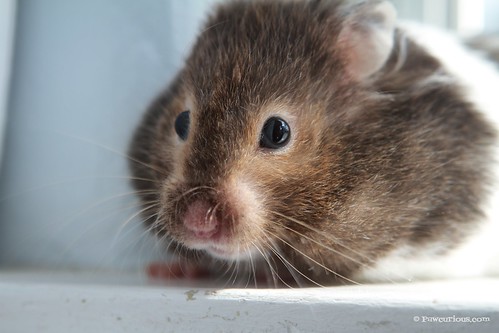
Hamsters, for instance, are crepuscular, meaning that they’re most active early in the morning and around twilight, which can tend to irritate many young children to “want to see the hamster do something.” They, like most of us, get cranky when their sleep is disturbed, which makes them ill-suited for handling in the classroom. Popular “hamster balls” sold for “exercise” often serve more to amuse the humans and terrify the hamster.
Another popular classroom pet, rabbits are also crepuscular but at least don’t burrow themselves under their bedding as do hamsters and gerbils. However, rabbits are more akin to a dog than a hamster or even a cat in their needs and behavior.
They normally live in groups and can become depressed when solitary. They can live up to ten years when properly cared for. They need a minimum of ten or so square feet of cage space, not the two to three feet common in commercial cages. They need places to hide, and they need a varied diet with unrestricted access to fresh hay.
Guinea pigs have many of the same challenges with the added issues of being extremely shy and having even more specialized dietary needs.
I’m not trying to discourage classroom pets. However, I’ve seen too many cases where the class hamster was passed around from student to student over the weekend, or worse, where it was left in an unheated school building with “a little extra food” over two weeks of winter break.
What are we trying to teach our students when we show them that an animal is something to be passed around as a “treat” to someone who knows little to nothing about its care needs? What lessons do they learn when we allow them to poke at the hamster to wake it up because it’s “boring?” When the cage is left uncleaned for two weeks because other obligations got in the way, what do the students learn about their responsibilities in caring for beings that are unable to care for themselves?
I’ll address how to EFFECTIVELY use classroom pets in part 2.


“Mammals require tricky things like socialization, constant temperatures, regular habitat cleaning, and a reliable supply of appropriate food.”
This is just as true for birds, and at least twice as true for reptiles, and harder to achieve for both as commercially available food is not only harder to find but less=researched to even ensure that we know what nutrients they need. I grant that most small mammals don’t make ideal classroom pets, but I’d rather see them in a classroom than most reptiles or birds.
More on that coming in part 2, I promise. 🙂
I just wanted to say thank you, thank you, thank you for providing accurate information about the needs of rabbits – as someone who’s been doing domestic rabbit rescue for the last 11 years, I can’t tell you how many calls and emails we get yearly for dumped classroom rabbits. THANK YOU! I hope someone reads this and takes the information to heart.
I must have been in the right kind of classroom in 5th grade. Not only did one of my teachers have two guinea pigs, three turtles, and a bevy of hissing cockroaches, but she also had a tub of worms in nice, nutrient rich dirt, and would occasionally bring her dog in to class. Every night she would bring home the guinea pigs and the turtles (and of course the dog if she brought him) and would always bring home the whole menagerie on long weekends and vacations. That was where I first learned how to care for guinea pigs and that turtles can carry salmonella so always wash your hands (luckily I didn’t learn that the hard way). In later years I visited that teacher and told her how wonderful it was to have been in a learning environment where there were well cared for and loved animals.
Can’t wait for part 2!
In 5th grade we had cheap little guppies. Each table of four students had a small fish tank on their desk, and it was that table’s responsibility to feed, change the water, etc… it was easy to leave the fish over the weekends, but on long wkends or vacations one of us would take it home. Super easy, taught responsibilty, etc… I think a lot of the kids really learned the lessons well since they weren’t really “Class pets,” they took extra responsibility because each table “owned” it. Wow. haven’t thought about those little fish in many years.
We had a newly acquired pair of female hooded rats in our science class in fourth grade. I suckered my Mom into letting me take them home over Christmas break. Well, apparently they weren’t separated from the boys in time at the pet store because I took back almost twenty adorable little hooded rats. Needless to say my mother did not ever again let me babysit another classroom critter.
At a daycare that I taught we had a bunny, a turtle, and evil gerbils. If I didnt come in on the weekends (no pay) that Bunny would have died. Other teachers would come in Mon and say, ” Oh I was here this weekend and the bunnies food was overturned and he knocked his waterbottle off, poor bunny.” THEN FIX IT !!
The only respect these kids had was for the turtle b/v I brounght him in and made the rules. When I left, my director said I had to find a new home for the turtle and bunny. Didn’t care. Turtle went to a local zoo (after lots of begging) and bunny went to a good friend. Turns out bunny and several infections that needed several antiboiots and trips to the vet. My angel friend paid it all, see there really ARE angels. And the gerbils Still give me nightmares.
That said, make sure whatever situation you are in that you are READY for a pet.
I hear goldfish are nice. 🙂
How about rats? They’re human friendly (when socialized), fairly sturdy and intelligent. Maybe the intelligent part would make them more challenging to keep stimulated? And you’d help rehabilitate their social image (Ratatouille not withstanding)
When I was teaching, I kept many classroom pets, including mammals, snakes, arachnids, and birds. Proper care is difficult, but I was willing to do it for the lessons the children learned. And you are right, they weren’t always the lessons I intended, but that’s OK! My ideal classroom pet would have been one of my well-trained Goldens, but the admin wouldn’t allow that. 🙁 I envied a teacher in an adjacent district who was allowed to bring a golden in every day to her classroom. She had the most well-socialized puppies I’ve ever seen!
Mommy used to have classroom frogs – raised from tadpoles – and she brought them home every vacation. The kids in her class begged to be the “frog keepers” for the week – it was one of the more popular classroom responsibilities.
She *really* wants to have more time to work with Henry to become a certified therapy dog and then convince her admins that he should be able to come to school with her on Fridays – she’s read some really interesting articles about the advantages of having a dog in the classroom…