
Fetching Tag’s Jen Cleere summarizes what so many of us who have dealt with pets with cancer have had to face: When is the treatment worse than the problem?
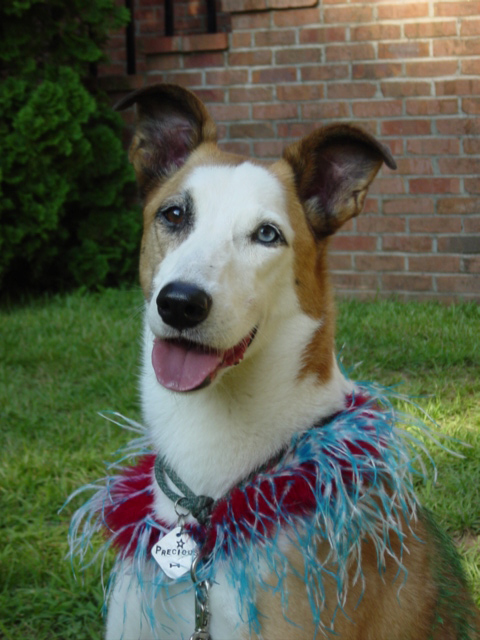
My dog Ruth’s 1st round of cancer at age 7 seemed to be easily dispatched. A little surgery to excise the grade 2 mast cell tumor on her side and a change in diet from kibble to raw, and she was soon thriving. For a month or three I had felt sure that this was the tragic end to her young life, but doom took the back burner when she returned to full speed. And full speed was a blazing 35 mph for my fleet-footed, flashy red & white crackhound.
When a mass started to develop in her throat 3 years later, I pretended to ignore it for months, as the weight & certainty of cancer’s return settled heavy on my heart. When I finally took her in for an exam, my fears were confirmed. Although the tumor was too bloody to get a conclusive needle aspiration, X-rays showed that her hyoid bone had already partially dissolved into the growing mass. The vet advised me to take her collar off, creating the irony of a dog that had launched an ID tag company who was now unable to wear one. She also wanted Ruthie to avoid contact play with other dogs and over-exertion to prevent, as much as possible, some horrific bleed-out of the tumor.
Surgery was not a simple option this time, and that definitely informed my decision, but more than that, I Knew This Dog. I had spent 10 years with her and I knew how much she disliked vet visits and medical “treatment” of any kind, including first aid for even the most minor wounds. And I knew that if she was dying, I certainly didn’t want to spend whatever time she had left putting her through something painful as a bargain for the chance at a little more time.
It all sounds so noble & wise now, but at the time I wallowed in the tragedy of our circumstance. I was completely devastated by the thought of losing this, my first, my heart, dog. Tears came to my eyes whenever anyone would ask how she was doing. But I stuck to my guns and kept the promise that I’d made to Ruth the day that we left the vet & I slipped the collar from her neck: I promise you will never have to set foot in a vet’s office again. She didn’t. And when the mobile euthanasia doc came to the house one morning 4 years later, she was stunned to hear just how long Ruth & her tumor had lived together and commended me for making the brave choice of ‘no treatment’.
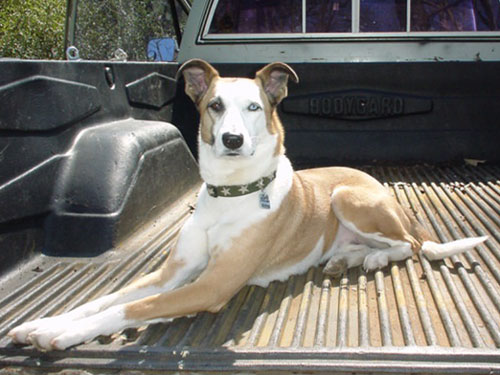 That she lived so many years with no veterinary care after the grave diagnosis is sort of a punch line to the story. I did carefully tailor her diet & supplements to the best of my knowledge and in response to her condition. As she got older, she tolerated less & less variety in her diet, so I simply let her body determine what she could eat.
The tumor was scary – it grew from lemon to grapefruit sized over the years – but it didn’t really affect her in any noticeable physical way except to make her breathing loud if she slept on it wrong. Then she just got old – her hearing dulled and she was stiff in the hips. It was not possible to separate symptoms of the downhill slide of aging from what might have been cancer, not that it mattered – especially to her.
And that is what I believe is the key. Cancer didn’t matter one bit to Ruthie. Dogs just don’t give a flying crap about cancer and they’re certainly not consumed with thoughts of impending tragic death or whether or not to try chemo. The equation was simple for her, and as it turned out in the end, for me: Ruth trusted me & I trusted her and what I knew about her. Whether it bought us 4 years or a single day, the math was perfect.
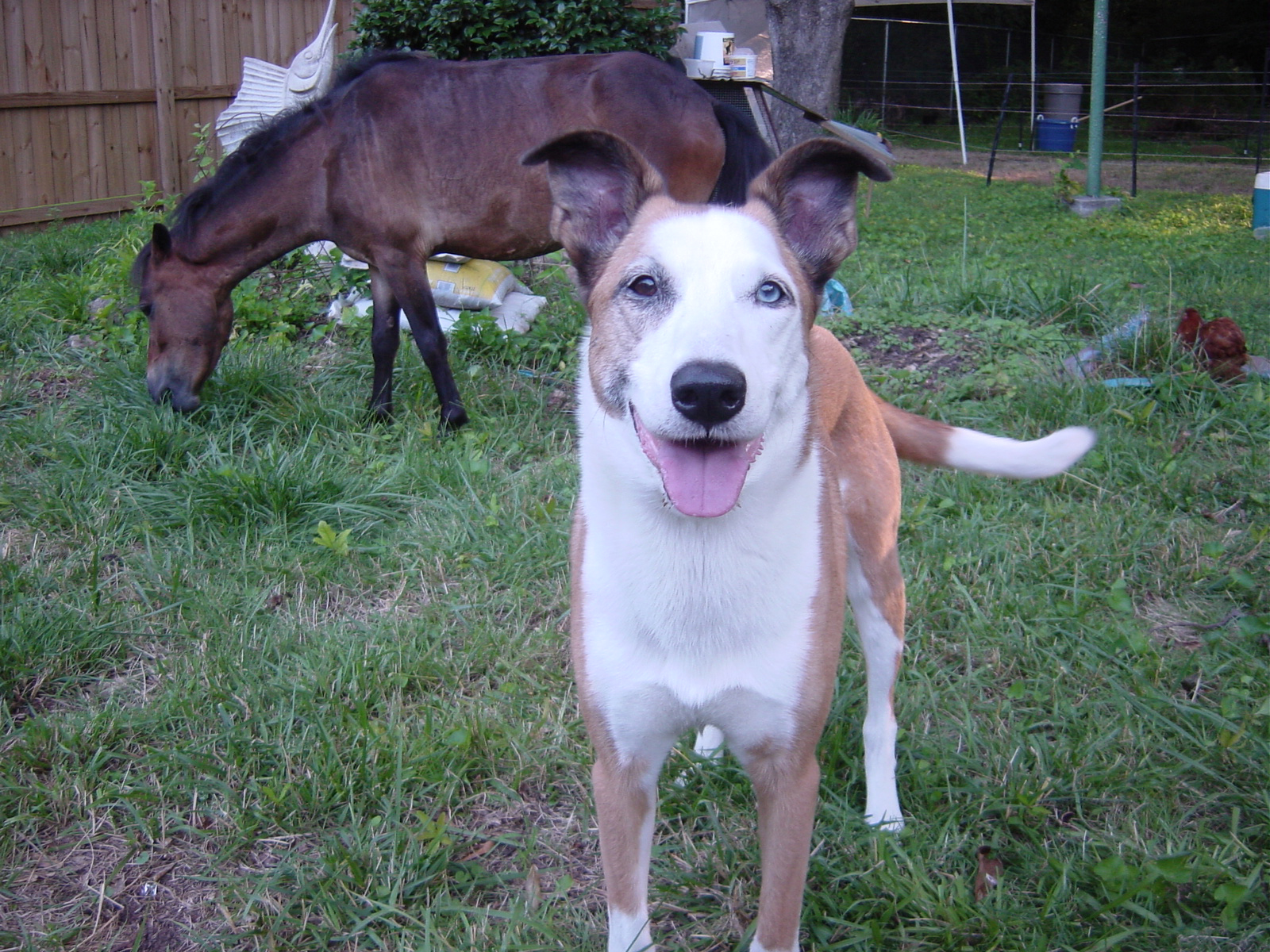


GORGEOUS dog and I am doing the same thing at my house with my dog Charlee. She is awesome and I won’t subject her to what she hates. (pass the kleenex please)
What a beautiful story.
Deb took the words “out of my mouth.” I love this story! And I love the fact that Jen was brave enough to take this road. I second guess myself daily for not choosing to amp Shaq’s leg when we found the bone cancer. But like Jen, I knew my dog. He would not have chosen that option in exchange for a few more months. He was older and had arthritis, and I just couldn’t take what had been, up until that point, one of his “good” legs. It does my heart good to read stories like this of people who listened to their (and their dog’s) heart.
P.S. Clyde has a Fetching Tag, and we love it!
(drying tears) What a beautiful story. I lost my Bailey only 6 weeks after the diagnosis of a mast cell tumor at the base of her tail. Two surgeries, but I refused to to chemo or especially radiation, which were both recommended. She was 12 1/2 and I just couldn’t subject her to that, especially given the location they would have to irradiate. And since I had her for such a short time after the diagnosis, I can only think that it would have made the little time I had left with her a nightmare of epidemic proportions. She seemed to be doing fine for most of that time, but her health just bottomed out during the last week. No one knows what really took her life, but at least I know that she spent her last weeks surrounded by love and as pain-free as I could manage for her.
a beautiful story… I lost my heart dog to cancer as well.
Thank you for sharing your story. I think you definitely hit the nail on the head – I know my pet. With my Bailey (who we adopted from a feral kitten rescue), I made a similar promise about the vet. He was not fond of humans and particularly not fond of humans who poked and prodded. In our last vet visit, I said “Never again, bud” and I stuck to that promise. It was heart-wrenching for us but we knew him and knew his final days were better for it.
I have a Bailey, too: a 70lb lab/pit mix who is the joy of my heart and soul. Bailey is my very first dog (I grew up with cat people for parents) and I often wonder what it will be like in the end for he and I. Every birthday makes me cringe, every new cluster of grey hairs on his muzzle are an atrocity. At six-and-a-half he is still spry and agile, able to leap into the back of the Subaru and onto our hip-high bed with the greatest of ease. But I know him and that means I’m watching… scrutinizing his every move… dreading any sign of the old age or illness that will, inevitably, come to us someday. Nobody wants to think these things about their constant companions but we all know the sad truth, that they won’t be with us here on earth forever. So for now, I’m glad that he’s my boy and I’m his girl. I look at him laying in the sun spot on the rug and I am proud of how healthy, well-adjusted, and content he is. I am grateful for the peace he gives me when I’m feeling down or anxious. I am overjoyed by the laughter he brings to me every single day. I am eternally blessed to have him here today and no matter what happens in my heart forever.
My dog helped me to see God. Without Him, I wouldn’t have him. We are truly meant to be, doggy and human soul mates.
I love you, ol’ Beezer Beany Buns. 🙂
Beautiful story, beautiful dog. It is so important but often can be heart wrenching to go with what is best for the dog as opposed to simply prolonging life. Kudos to you for being such an amazing friend to Ruthie when she needed you most.
Thanks for sharing this story.
I’m a cancer Victor of 32 years. I have a vicious history of cancer in my family. I also have a different take on cancer than most folks.
Here’s my theory: First of all we last too long, as humans. We were REALLY lucky to make it into our 40’s though out most of the history of mankind. If we did, it meant that we hadn’t been eaten by a wild animal, succumbed to contact or communicable diseases, lasted though Tribal Warfare, Famine, & Drought. Our kidneys, liver, heart and lungs had not failed us, among MANY other things.
Now, we make War from afar, kill the wild animals if they come any where near our towns, vaccinate, decontaminate, medicate and, if we can, transplant.
ALIVE! We MUST stay ALIVE!… Why?
What makes us so special that we should live, no matter what? That’s the thinking of a wild creature, not a knowledgeable, literate society that CERTAINLY must know that EVERYTHING passes!
I don’t know, but I THINK that most people think that the effects of Chemo’ & Radiation are what CANCER does to your body. Cancer is usually a lot quicker than the drawn out suffering of treatment – especially if it doesn’t work. My Dad fought to live to the end- he had a good reason. My mother, on the other hand, said that she would like to be allowed to leave this plane while her 6 children were all doing well. In her words: “A lady knows when to leave the party.”
My dad suffered, and went through a true Hell to stay alive, even if it wasn’t really living. My Mom was at my brother’s surprise birthday party only a few weeks before she passed, frail but, pink cheeked and alive, loving all who she was getting to see again, when she hadn’t thought she’d live that long.
You gave Ruthie the same gift my mom asked for: Let me be alive until I’m dead. You opted out of my dad’s experience: suffering, weak, afraid, hanging on for the sake of others.
I plan to choose Ruth & my Mom’s option, if at all possible. I think you not only did the right thing, but what was the natural Way. God Bless ya, honey.
I hate cancer. I lost Tonka to that beast as well. I’m glad you and Ruthie had those peaceful years, and I’m glad you made and kept that promise to her.
What a beautiful story about an amazing dog. I’m sure it was a difficult time and I’m happy you had those extra moments with Ruthie. I’d like to think she’s running with my Blade now (and Dr V’s Emmett & Mulan) while they wait for us.