Today, I’m happy to feature a guest post from moving expert Tim Eyre. Moving is one of the most stressful times in our busy lives, and that goes double for the animals who have no clue why their routines have been upended. So without further ado, here are Tim’s tips for making the transition a success!
Regardless of whether you’re relocating to an entirely new area or just buying a house down the block, moving can be an incredibly stressful and emotional experience. Dealing with things like selling your current home, possibly starting a new job and, if you have kids, helping them adjust to a new school can make the moving process challenging. Ultimately, moving affects the entire family, and surveys suggest that nearly three quarters of Americans consider their pets a part of their family unit. With approximately 11 million families with pets moving in the United States annually, more attention needs to be given to the effect those moves have on animals. With a little careful planning, almost any pet can be transported and acclimated to new surroundings safely and happily.
Plan Ahead
Although all pet owners should be on top of this regardless of whether they’re planning to move, those who intend to relocate need to be especially mindful of their animals’ identification. Using identification tags attached to collars is a good starting point. And, today, many veterinarians recommend placing a tiny microchip with a unique identification code under a pet’s skin to help locate lost animals. Prior to a move, obtaining your pet’s health history is also important. Particularly if you’re moving far away, researching potential veterinarians in your new town ahead of time can help make for a smooth transition.
Packing Up
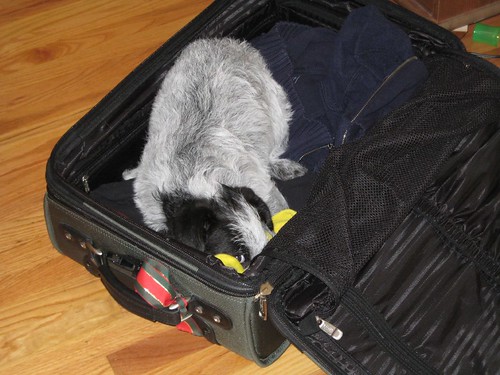
Animals often seem depressed when they see luggage lying around prior to their owners’ vacations ñ a sort of precursor to separation anxiety. Therefore, if all the contents of a home are being packed away and removed, chances are a pet’s stress will spike. To alleviate anxiety, consider setting up a “safe room” for pets while the packing and moving is going on. Confining an animal to a room it’s familiar with and comforting it with items it has an attachment to should help protect it from the chaos ensuing in the rest of the house. And, whenever possible, remove pets from the home when the heavy moving is going on, particularly if movers the animal doesn’t know are involved. That could help distract the pet and avoid extra anxiety from the appearance that a stranger is taking its home away.
Traveling
If you’re relocating to somewhere far away, great care needs to be taken to ensure that the trip to the new town is as comfortable and stress free as possible. If the pet is flying, try to introduce the carrier it will ride in well in advance of the trip. Letting it sleep in the carrier, or just having it sitting out in plain view, will likely help the pet familiarize itself with it. Also, talk to your veterinarian about whether prescribing medication is a good idea for your animal. Some experts recommend that pets take a sedative or anti-anxiety drug prior to a potentially stressful flight. In addition, try to find a flight with no layovers so your pet isn’t exposed to repeated changes in air pressure and temperature.
Some of those same tips apply to a long car rides as well. In addition, if your road trip will require one or more overnight breaks, make sure to call in advance to find a pet friendly hotel. Once you check in to the hotel, check out the accommodations and inspect your room for potential pet hazards. Remember, no matter how well behaved your animal is, changes in environment can produce unusual behaviors, so be on the lookout for signs of stress. And during long drives, make sure to stop regularly to give your pet a chance to get some water, stretch its legs, and use the bathroom.
Inspect the House
Once you arrive at the new abode, make sure to inspect the interior before letting any pets have free reign. Latent hazards could be lurking around, having been left over from the prior owners or their movers.
Transition Slowly
Consider setting up another “safe room” at your new home for the first few days, or at least during the heaving moving, to insulate your pet from the chaos. Because they’ll likely be confused about what’s going on, gradually introducing animals to their new surroundings may help them adjust. Also, at first, regardless of how reliable your pet may be when unleashed, keep it confined outside. Sometimes, the stress caused by a big move can create the urge to flee.
Make the New House as Familiar as Possible
Immediately upon arriving at the new house, reintroduce your pet to objects it is familiar with. Animals are creatures of habit, so making its new surroundings as similar as possible to the old house will help make the adjustment smooth. For example, placing food bowls and water bowls in the same general area they were kept in the old house may help an animal feel more comfortable. The same goes for litter boxes.
Keep the Same Schedule
Although routines often get interrupted in the midst of life-changing events like relocating to a new area, make a concerted effort to keep pets on the same schedule they kept prior to the move. Try to reintroduce whatever schedule your pet adhered to prior to the move, including feeding times, walks, or bathroom breaks.
Forgive Minor Missteps
It’s not uncommon for housebroken pets to have accidents after a big move. Therefore, try to be patient if your pet’s anxiety leads to a few messes. And very minor behavioral problems should sometimes be tolerated to avoid punishing an animal for actions it cannot control.
Tim Eyre works in the self storage industry, regularly traveling to see locations like Pasadena self storage. In many locations, like Shawnee self storage, Tim helps his customers store seasonal equipment when it is not being used for outdoor activities or home improvement projects.
Photo credit: Travel Sized Dog by bradleyolin on Flickr


LOVE THIS SITE !!!
two thumb up
Lot’s of good stuff in there, just as an FYI when they say “Some experts recommend that pets take a sedative or anti-anxiety drug prior to a potentially stressful flight.” please check with your airline first!
When I flew my babies I was told that they would not be able to fly if they had taken any kind of sedative, they wouldn’t accept the risk of something going wrong.
Good advice, especially about finding pet-friendly hotels (seriously, even if you don’t think you’ll need one, do it–we thought the 6 hour drive was fine, but after a day of moving it wasn’t. And we were up all night keeping the cat out of the motel window!).
We have moved 3 times with our cats. Put a Feliway diffuser in the new place as soon as you can to aid adjustments. If you pet prefers a certain piece of furniture, set it up and leave it right away. We made sure the bed was available for the cats to sleep on & under, and set up the one cat’s favorite dining room chair/sleeping pad too.
If you can tolerate it, try putting food and litter in your bedroom for the first night or two. Helps make sure scared kitties will use both things. Migrate that box out of your room right away, as DEAR GOD stressed pets leave bathroom bombs.
and, yes, as he says, forgive transgressions! they’re as stressed as you!
Also, we moved in-city, and actually transported the whole, slightly-used litter and litter box to the new place to give them familiar scents.
It is an amazing blog and thank you for sharing this wonderful information with us. It is good to take an extra care of your pet and understand their stress in the process of relocation. In a way, it is good to take the pet to veterinarians to give him sedation or anti-anxiety drug before stressful flight. I think this blog will be useful to people who are relocating with pets. Please keep sharing information like this with us.
I’m totally filing this away for future information. No plans now, but it’s not beyond the realm of possibility that there might be long distance flights with my cat in the medium to long term.
Hi Y’all,
Great stuff.
My Humans make sure we stop frequently when we travel by car.
Y’all come by now,
Hawk aka BrownDog
Thanks for posting these valuable tips! It was by pure chance that I came across this article before we moved. (I’m glad that I did though =) We had to travel by boat (8 hours) and bus (3 hours). My 5 year-old Lab, Betsy, had to be placed in a cage (ship regulations) and we had to go through a lot of paperwork. It’s a good thing we had her papers and health records ready. Since it’s not a peak season in passenger travel, we were allowed by the ship’s captain to put Betsy along the hallway (still in her cage, of course).
When we arrived at our new house, Betsy had to sleep in our bedroom for 4 nights before she relented to sleeping in her spot by the stair landing. Now, she’s back to her old self and eagerly waits for her game of “fatch” (catch and fetch).
Great story! Dr.V is such an awesome person! I’m felling so glad that I have founded such a unique blog!!
Well written article.I appreciate your writing skills.Its great.You have done a great job by sharing this post with us.Its really great.Keep in touch with us in future too.
Fantastic work! I really like the way you have mentioned each and everything. Thanks for sharing.
Thanks for this post.I would like to read your more updates.Keep in touch with us in future too.
One of the best blogs I’ve read. I’ve recommended this blog to some of my colleagues. I’m sure they’ll find this useful as I found.Will definitely recommend to others. Good work.
Moving is also stressful for animals as it is considered for human being. I appreciate your ideas about to take care of pets while moving to any other place. It is good to read about the best pet moving.
I am
glad that you showed concern for pets also because it also becomes difficult
for them to relocate. And I am thrilled that I came across this post today
itself because even my family is planning a move next week. It was really
helpful for me.
Nice tutor. Your way of presentation is really too good. I am totally impressed by your post. I am looking for your more updates. Keep them coming.